November 19, 2026
Why Water Pooling on a Driveway or Patio Is Never Just a Surface Problem
By Barry Gallant
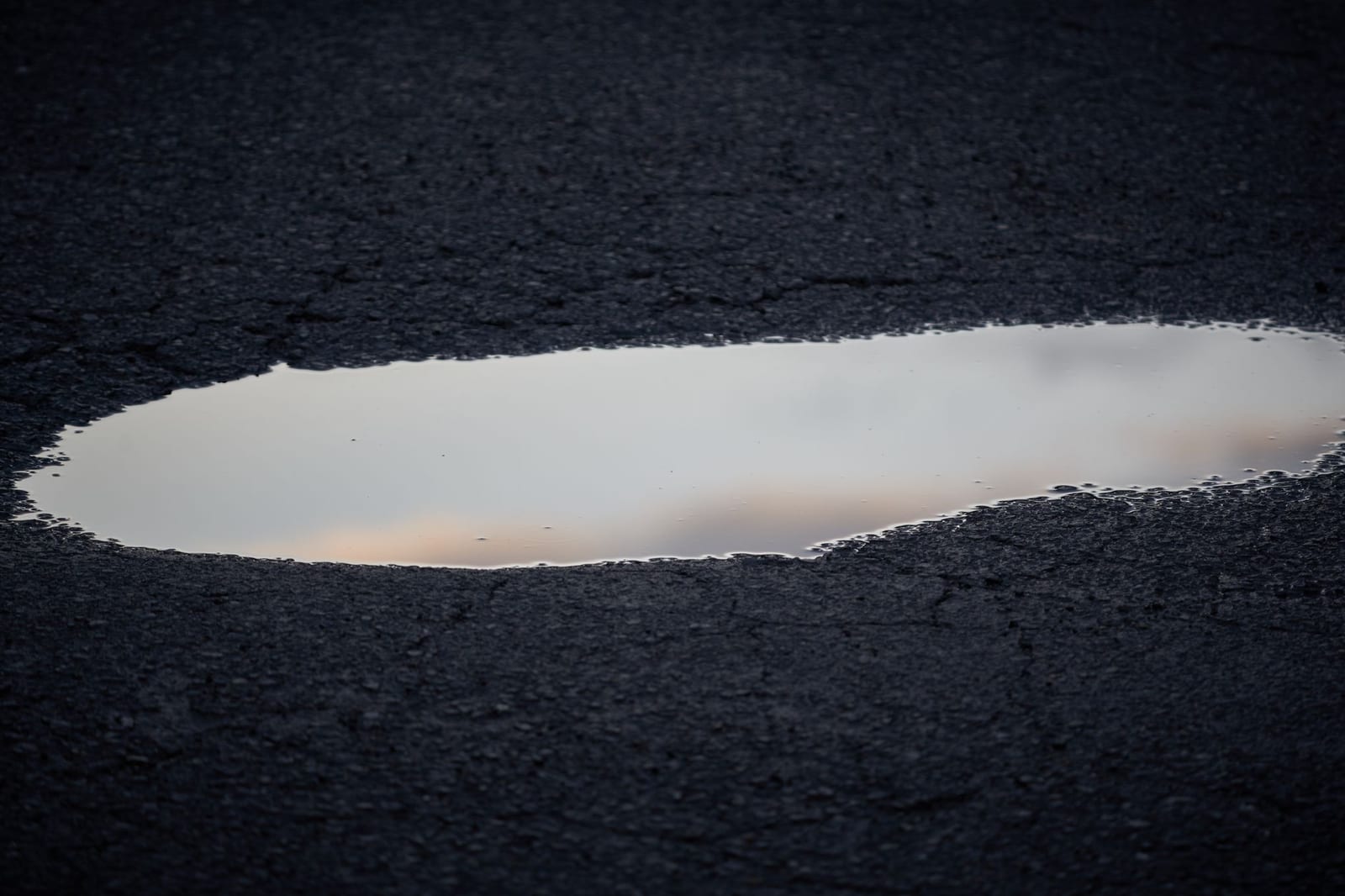
The Puddle That Keeps Coming Back
Say you notice the same spot on your driveway holding water every time it rains. Maybe it is by the garage door, or near a low corner of a patio. You watch it for a season, tell yourself it is not a big deal, and then winter comes and that puddle turns into a sheet of ice right where you walk to your car.
That puddle is not a small thing. It is a symptom, and the cause is almost always below the surface, not on it.
What People Usually Try First
The first instinct is to seal it. Seal the asphalt, patch the concrete, maybe throw some patching compound in the low spot and call it done. That can buy you a season, sometimes less. It does nothing for the actual problem, which is that water has nowhere else to go.
Asphalt and concrete do not hold water by accident. They hold it because the surface was never pitched enough to send it somewhere else, or because the ground underneath has settled and created a bowl where there used to be a slope.
Reading the Ground Before Reading the Surface
When I look at a spot like this, I am not looking at the asphalt or the concrete first. I am looking at the grade around it. Where does the land naturally want to drain? Is there a downspout dumping straight onto the pavement a few feet away? Has the soil under one section settled more than the soil next to it, maybe because of an old trench, a tree root that rotted out, or just years of freeze and thaw working on uneven base material?
A driveway or patio is only as good as what is packed underneath it. If that base was not compacted right, or if it was built on soil that was never going to hold up, the surface will follow it down. You can repave the top ten times and the low spot will come back every time, because the ground is still doing what it was always going to do.
Why Slope Matters More Than People Think
A proper surface needs a slight pitch, usually a small percentage of fall, moving water away from a house foundation and toward a spot where it can actually leave, like a lawn, a swale, or a storm drain. It does not take much slope to do the job. It takes almost no slope at all to fail at it.
The mistake I see most is treating that pitch as something you can fix later with a patch. You cannot. Pitch gets built in when the base is shaped and compacted, before anything gets poured or laid down. Once the surface is in, you are stuck with whatever slope is already there, unless you are willing to dig it back up.
When It Is Really a Drainage Problem
Sometimes the fix is not about the pavement at all. If water is pooling because a downspout empties right onto the driveway, or because a neighboring yard sheds water onto your property, the real answer might be a drain, a swale, or redirecting that water before it ever reaches the paved surface. I have seen plenty of driveways that would be fine if the water hitting them was cut in half.
This is the part that gets skipped when someone just wants an estimate for new asphalt. Nobody asks where the water is coming from. They ask what it costs to repave.
How I Think Through It
My approach is simple. Find where the water actually goes, not where you assume it should go. Walk the area during or right after a rain if you can. Look at the low points, the slope of the yard, where downspouts land, and whether the problem is new or has been there since the surface went in.
If the base was built wrong, the fix is pulling it up and rebuilding the grade correctly. If the water is coming from somewhere else, the fix might be smaller, a trench drain, a regraded strip of lawn, a redirected downspout. Either way, the answer is never just more sealant.
The Short Version of a Long Habit
I have been doing this kind of work long enough to know that pavement rarely fails on its own. It fails because of what is underneath it or around it. A puddle that keeps coming back is the ground telling you something. The job is to listen to that before you ever reach for a patch kit.